- Views: 54
- Replies: 1
As the Indian Air Force (IAF) evaluates its options for the Medium Transport Aircraft (MTA) programme, the propulsion system driving Embraer’s C-390 Millennium is coming under intense scrutiny.
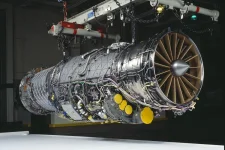
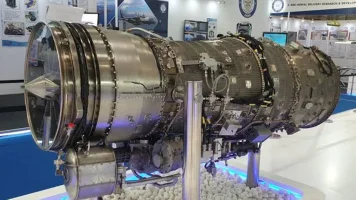
The aircraft relies on the International Aero Engines (IAE) V2500 turbofan. While this engine is highly dependable and extensively utilised in commercial aviation, its mature stage in the production lifecycle presents both distinct advantages and potential hurdles for a defence procurement initiative that could involve up to 80 transport aircraft.
The sheer scale of the anticipated MTA contract elevates the engine choice to a critical strategic level.
Procuring 80 C-390 planes would require approximately 160 installed engines, alongside a substantial inventory of spare engines and replacement parts. Over the operational lifespan of the fleet, India could be tasked with sustaining between 180 and 200 V2500 engines.
Consequently, establishing reliable, long-term support is a major strategic priority, extending far beyond a simple technical preference.
The Challenge of Lifecycle Support and Production Capacity
A primary focus for defence planners is long-term sustainment. Military transport aircraft are expected to serve for 30 to 40 years, meaning the platform selected today must remain fully functional and easily maintainable well into the 2050s and 2060s.Although the V2500 is a robust and proven powerplant, it is no longer the primary engine in commercial production, as the civilian aviation market has largely transitioned to newer-generation technologies.
This shift naturally raises questions regarding the guaranteed availability of freshly manufactured components, specific production tools, and dedicated original equipment manufacturer (OEM) support decades into the future.
Furthermore, current manufacturing capacity presents an additional consideration. At present, the assembly of V2500 engines is primarily focused on servicing existing commercial operators and fulfilling limited military orders, such as Embraer's ongoing C-390 requirements.
If India places a massive order for 80 new aircraft, the engine manufacturers would need to scale up their production and infrastructure significantly to meet the IAF's delivery timelines, which could present complex supply chain and logistical challenges.
Geopolitics also plays a vital role in this evaluation. The V2500 is manufactured by International Aero Engines, a global consortium that includes Pratt & Whitney from the United States, MTU Aero Engines from Germany, and the Japanese Aero Engines Corporation.
Any long-term military support agreement would inherently rely on multiple nations and their respective export regulations.
Indian authorities must carefully assess whether depending on such a diverse, multinational supply chain might create vulnerabilities if global tensions rise or export controls are implemented.
Mitigating Factors and the 'Make in India' Advantage
Despite these potential complexities, the V2500 engine possesses several compelling strengths that could address many of the IAF's concerns.The most significant advantage is the engine's massive global footprint. With over 7,000 V2500 engines built for the commercial airline industry, the platform benefits from one of the most extensive maintenance, repair, and overhaul (MRO) networks in the world.
The vast pool of technical expertise, readily available spare parts, and established repair facilities ensures that support will remain robust for the foreseeable future, even as commercial production naturally tapers off.
For India, the strategic partnership formed between Embraer and the Mahindra Group to bid for the MTA programme serves as a major mitigating factor.
An order of 80 aircraft provides the Indian government with immense negotiating power to establish comprehensive MRO capabilities domestically.
Embraer has explicitly proposed replicating its existing production ecosystem in India, aiming to set up a full-scale assembly line and an exclusive regional MRO hub.
This deep localisation effort could encompass local engine servicing, testing infrastructure, component manufacturing, and potentially the local assembly of the V2500-E5 military variant.
Such a move perfectly aligns with the 'Make in India' and Aatmanirbhar Bharat initiatives, significantly reducing reliance on foreign supply chains while strengthening the domestic aerospace industrial base.
Operational Reliability for the IAF
The technological maturity of the V2500 is also viewed as a distinct operational asset.While newer commercial engines frequently face maintenance and durability teething problems in their early years, the V2500 is a thoroughly proven system with decades of reliable service.
This high level of dependability is particularly vital for the IAF, which routinely operates in demanding environments.
The jet-powered C-390, capable of carrying a 26-tonne payload and cruising at high speeds, requires an engine that can withstand the rigours of operating from austere Advanced Landing Grounds (ALGs) along India's borders, high-altitude forward bases in Ladakh, and regions with extreme temperature variations.
Ultimately, while the V2500's current production status requires careful planning, it is unlikely to be a dealbreaker for the MTA competition. Instead, it will be a central focus of contract negotiations.
Should the Embraer C-390 Millennium win the bid, Indian defence officials will undoubtedly demand robust guarantees for long-term component availability, significant technology transfer, and the establishment of a dedicated domestic maintenance ecosystem to support the fleet securely into the second half of the century.