- Views: 4K
- Replies: 11
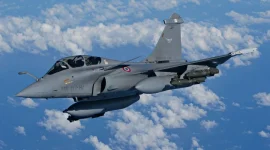
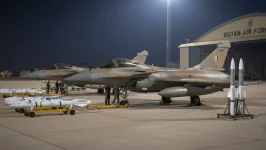
New Delhi is adopting a calculated and highly technical strategy for its monumental ₹3.25 lakh crore procurement of 114 Rafale fighter aircraft.
To guarantee that locally developed missiles and munitions can be armed on the French jets, the Ministry of Defence (MoD) is preparing to enforce the inclusion of an Interface Control Document (ICD) within the core government-to-government contract.
At its core, an ICD serves as a comprehensive engineering rulebook. It dictates exactly how an aircraft’s complex subsystems—ranging from advanced avionics and radar to electronic warfare suites and weapon launchers—communicate with one another.
By legally cementing this framework into the deal, India secures a standardised digital gateway. This allows domestic weapons to be integrated seamlessly into the fighter's systems without requiring the manufacturer to hand over sensitive proprietary software.
This strategic pivot is crucial given the global complexities surrounding military technology transfers.
Historically, the demand for "source code" access has been a persistent roadblock in major fighter jet acquisitions. Original Equipment Manufacturers (OEMs), including Dassault Aviation, strictly guard the core source codes of mission-critical systems.
These codes govern everything from flight aerodynamics to targeting algorithms and represent the company's most valuable intellectual property, which is simply not shared with foreign buyers.
Rather than pursuing a futile demand for total software access, India’s push for an ICD provides a highly practical alternative.
It establishes a secure digital boundary where Indian defence scientists can "plug and play" native platforms.
This ensures that cutting-edge domestic weapons—such as the Astra series of Beyond Visual Range Air-to-Air Missiles (BVRAAMs), the Rudram family of anti-radiation missiles, and future indigenous precision strike systems—can be fired from the Rafale without compatibility issues.
The broader framework of this deal, cleared by the Defence Acquisition Council (DAC), is structured to significantly boost the domestic aerospace industry.
Out of the 114 jets, the first 18 will be delivered by France in a "flyaway" condition. The remaining 96 aircraft will be built on Indian soil under the "Buy and Make" initiative.
This massive production effort requires at least 25 percent indigenous content initially, a threshold that will steadily climb as local supply chains and manufacturing capabilities expand.
Ultimately, the ICD mandate gives the Indian armed forces complete operational flexibility for decades to come.
By creating a controlled software bridge, Indian engineers can continuously upgrade the fighter's arsenal with homegrown technology, fully respecting the manufacturer's intellectual property while significantly advancing India's self-reliance in defence capabilities.