Rolls-Royce Pitches 120kN AMCA Fighter Engine with Future Upgrade Path to 145kN Wet Thrust Capabilities

Rolls-Royce Pitches 120kN AMCA Fighter Engine with Future Upgrade Path to 145kN Wet Thrust Capabilities


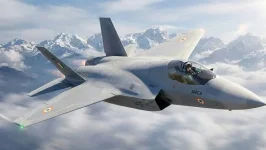
In a major development for India's aerospace sector, British engineering giant Rolls-Royce and Reliance Industries Limited (RIL) have formed a strategic partnership to create a fully indigenous jet engine for the Advanced Medium Combat Aircraft (AMCA) programme.

Announced in August 2026, the collaboration aims to establish a specialized centre of excellence within India.

This new facility will handle the complete lifecycle of the engine, spanning from original design and extensive testing to mass manufacturing and long-term operational support.

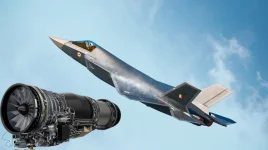
The joint venture's initial goal is to deliver a powerplant capable of generating 120 kilonewtons (kN) of thrust with the afterburner engaged, relying on a core that produces 73kN of dry thrust.

However, the blueprint includes a highly scalable upgrade path. As future AMCA variants demand more power, the engine's dry core can be enhanced to 88kN, which will allow it to output a formidable 145kN of wet thrust.

A key pillar of this proposal is absolute technological sovereignty. Rolls-Royce has committed to developing the engine entirely in India with a local core engineering team.

Crucially, the Government of India will retain 100 percent of the intellectual property (IP) rights.

Because this will be an official government-sanctioned programme, India will have the freedom to upgrade, tweak, or modify the technology in the future without needing any outside approval. This level of control is highly sought after in modern defence acquisitions.

The operational implications of this engine are substantial. Equipping an advanced fighter with twin 145kN engines would yield a total thrust of 290kN.

This immense power is ideally suited for a heavy, 33-to-35-tonne aircraft, which aligns perfectly with the design expectations of an authentic, 6th-generation air-superiority fighter.

Such future-generation jets require heavier takeoff weights to accommodate larger internal weapons bays, extra fuel for long-range missions, and the complex electronics necessary to coordinate with "loyal wingman" combat drones.

According to additional open-source reports, this joint pitch sets an aggressive timeline, targeting an engine core test by 2030, a maiden flight by 2034, and full-scale production by 2036.

This proposal places Rolls-Royce in direct competition with a rival engine offer from French aerospace manufacturer Safran, as India moves closer to securing a sovereign aviation ecosystem for its future defence needs.
 
We are making a grave mistake. We are required inventing the wheel. RR, Safran and GE do not have engines of 120kN class. They will wipe us dry and do their design and development at our cost. I had offered a rather simpler solution but a bit more complex politically. Please note we already have a flying aircraft F 35 and F 22 Raptor which have Pratt and Whitney engines of better class. Design proven, battle worthy, maintenance friendly with global logistics support. This is the right approach for India.
 
It is high time India takes a decision. Offer is best suited for the country. The offer from safran company can go parallelly along this. It may not be suitable to the people who are happy importing engines.
 
Giving such strategic authority to a private company as a partner can have strategic risks. Let Reliance pool its own money and take the risk and reward decision. Why should the tax payers money be leveraged to accelerate private profits
 
We are making a grave mistake. We are required inventing the wheel. RR, Safran and GE do not have engines of 120kN class. They will wipe us dry and do their design and development at our cost. I had offered a rather simpler solution but a bit more complex politically. Please note we already have a flying aircraft F 35 and F 22 Raptor which have Pratt and Whitney engines of better class. Design proven, battle worthy, maintenance friendly with global logistics support. This is the right approach for India.
Relying on US engines is exactly the wrong thing to do. Lessons from the F-404 and F-414 fiascos are absolutely clear. The US will NEVER share core tech and IP rights to keep the customer forever open to BLACKMAIL. If either Safran and/or RR are willing to share IP rights and core tech, we should grab it with both hands. Yes it wont be cheap but better in the long run.
 
We are making a grave mistake. We are required inventing the wheel. RR, Safran and GE do not have engines of 120kN class. They will wipe us dry and do their design and development at our cost. I had offered a rather simpler solution but a bit more complex politically. Please note we already have a flying aircraft F 35 and F 22 Raptor which have Pratt and Whitney engines of better class. Design proven, battle worthy, maintenance friendly with global logistics support. This is the right approach for India.
What about tech transfer and patent rights?
 
India has three choices: Safran, Rolls Royce or go it alone with the AMCA programme.
The Air Force and the MOD must make up their minds quickly. India does not have decades to twiddle its thumbs.
 
India has three choices: Safran, Rolls Royce or go it alone with the AMCA programme.
The Air Force and the MOD must make up their minds quickly. India does not have decades to twiddle its thumbs.
It is not the AMCA. That is progressing mostly as planned. The issue is about engines, mainly due to US blackmail and shenanighans.

India needs core techs for it's own engine eco system. That is what these two deals about.
 
It is not the AMCA. That is progressing mostly as planned. The issue is about engines, mainly due to US blackmail and shenanighans.

India needs core techs for it's own engine eco system. That is what these two deals about.
Engaging in another programme will draw money away from AMCA causing progress to be slower.
 
Engaging in another programme will draw money away from AMCA causing progress to be slower.
AMCA is already funded till prototype stage. It is all very well to say, it will cost extra money. But years of delay, neglect, and I dare say other considerations have brought India, and IAF to a situation where the only way forward is out of the box thinking and out of the box funding.

Situation now is TINA.
 

Forum statistics

Threads
7,990
Messages
68,373
Members
5,760
Latest member
anshu12
Back
Top