- Views: 164
- Replies: 3
The Indian Air Force (IAF) has recently issued a Request for Information (RFI) to acquire approximately 150 Stage-III advanced jet trainers, preparing to eventually replace its long-serving BAE Hawk Mk-132 fleet. This major procurement will shape the future of India's aviation sector.
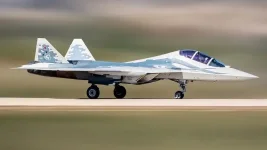
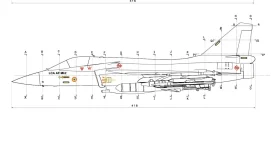
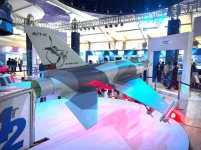
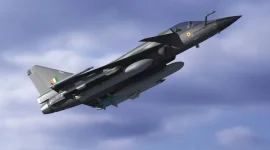
The competition currently centres on two indigenous pathways: Hindustan Aeronautics Limited's (HAL) newly proposed HLFT-42 supersonic trainer, and a twin-seat trainer variation of the existing Tejas fighter jet.
Ultimately, military decision-makers must choose whether to invest in an entirely new aircraft designed solely for education, or to rely on a platform that shares its foundation with the country's growing frontline fighter fleet.
The Tejas Trainer's Commonality Advantage
The primary benefit of choosing a Tejas-derived advanced trainer is that the underlying platform is already actively manufactured.Rather than engineering a brand-new jet, the IAF could take advantage of current Tejas assembly lines.
A two-seat Tejas trainer would share many critical systems with the standard light combat fighter, including its electronic architecture, ground support tools, and supply chain parts.
As the IAF aims to operate a large fleet of Tejas-family jets—including the upcoming Mk-1A and Mk-II models—this shared hardware would significantly lower logistical hurdles.
Furthermore, student pilots could transition smoothly from this advanced trainer directly into operational Tejas squadrons, cutting down on extra familiarisation time and saving money.
HLFT-42's Custom-Built Design
Conversely, the HLFT-42 (Hindustan Lead-in Fighter Trainer) holds a unique advantage because it is being conceptualised entirely around the mission of training pilots.First revealed as a scale model during the Aero India 2023 exhibition, the aircraft is specifically tailored to provide the best possible learning environment.
A custom-built trainer allows designers to prioritize vital educational features, such as excellent cockpit visibility for instructors sitting in the rear, predictable flight handling, and reduced hourly operating costs.
Transforming a standard combat fighter into a two-seat trainer is technically demanding; the extra weight and shifted balance require extensive aerodynamic testing to ensure safety.
By building the HLFT-42 from the ground up to prepare aviators for next-generation fighters like the Rafale and the Advanced Medium Combat Aircraft (AMCA), HAL hopes to avoid the compromises of modifying an existing jet.
Training for Networked Combat
Modern aerial warfare is increasingly reliant on teamwork between human pilots and autonomous drones, a tactic known as manned-unmanned teaming (MUM-T).A Tejas-based trainer could act as an ideal classroom to teach these digital combat skills, giving trainees early experience in commanding unmanned wingmen within a networked airspace.
However, simply using the Tejas airframe does not automatically grant these capabilities. Regardless of whether the IAF selects the Tejas or the HLFT-42, developers will still need to install specialized data links, intelligent mission software, and advanced control systems to properly simulate the battlefields of tomorrow.
Boosting the Aerospace Industry
An order for 150 aircraft will have a profound economic impact on India's defence manufacturing ecosystem.Committing to the Tejas trainer would strengthen current supply chains, providing domestic private-sector suppliers with consistent production volumes and better financial security.
This would help guarantee long-term maintenance support for all Tejas models in service. On the other hand, greenlighting the HLFT-42 would spark a brand-new indigenous aviation program.
This avenue would give HAL and its partners fresh expertise in creating and testing a modern supersonic trainer, potentially opening doors for future international export sales.
The Final Decision
There is no simple answer to which aircraft is superior. If the IAF's absolute priority is the quality and efficiency of Stage-III pilot training, the custom-designed HLFT-42 stands out as the logical choice.However, if military leaders place higher value on simplified logistics, factory efficiency, and the ability to use the trainer in a limited wartime combat role, the Tejas trainer presents a highly attractive alternative.
The deciding factor will likely be HAL's ability to prove that a two-seat Tejas can meet all training requirements without facing excessive development delays or compromising the student experience.
Ultimately, this procurement is about more than just replacing the Hawk; it is a critical opportunity to build a self-reliant defence aviation network capable of supporting hundreds of aircraft for decades to come.