- Views: 2K
- Replies: 2
Recently, the World Directory of Modern Military Aircraft (WDMMA) released its 2026 global air power rankings, surprisingly positioning the Indian Air Force (IAF) above China’s People’s Liberation Army Air Force (PLAAF).
This outcome has sparked heavy backlash from Chinese defence experts and state-linked media outlets. These commentators argue that the ranking system is defective and fails to capture China’s true military might or actual combat readiness.
Instead of just counting the total number of planes, the WDMMA uses a unique formula called the TrueValueRating (TvR) to assess military aviation. This system looks at elements like the variety of aircraft, maintenance support, fleet modernization, and overall force balance.
By factoring in these qualitative measures, the IAF achieved a TvR score of 69.4, outperforming the PLAAF’s score of 63.8, even though India has a much smaller collection of aircraft.
Experts in China, including those regularly featured in state-run outlets like the Global Times, have sharply contested these results. They claim the WDMMA’s conclusions are entirely separated from how these forces would actually perform in a real conflict.
A major point of contention for Chinese analysts is the gap between theoretical scores and practical warfare capabilities.
Prominent defence voices, such as former PLA Navy officer Zhang Junshe, maintain that computer algorithms and external grading systems are inadequate tools for measuring military power.
They believe that true strength can only be proven through combat readiness, real-world operations, and performance during an actual war.
The TvR system itself has also come under intense scrutiny from Beijing. While the methodology gives extra points to air forces that maintain a healthy balance of fighter jets, transport planes, trainers, and support units, Chinese critics argue it ignores key technologies that are vital for modern aerial combat.
Specifically, experts point out that the ranking fails to properly measure the impact of unmanned aerial vehicles (UAVs) or drones on the battlefield.
China has poured massive resources into developing advanced drones for spying, bombing, and electronic jamming. Commentators argue that the index largely overlooks this massive advantage.
Furthermore, Chinese strategists emphasize the importance of integrated, network-driven warfare.
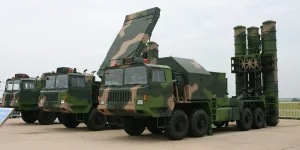
The PLAAF does not operate alone; it is deeply connected to a wider military network that includes satellite systems, long-range missiles, electronic warfare, and unified command centres.
By grading the air force as a standalone unit, critics say the WDMMA severely underestimates the true combat power of China's fully connected military machine.
The sheer difference in size between the two fleets is another sticking point. Current data shows the PLAAF possesses roughly 3,733 aircraft, dwarfing the IAF's inventory of approximately 1,716 units.
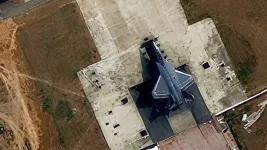
Observers in Beijing also highlight China's robust domestic aviation industry, which can quickly manufacture advanced planes like the J-20 stealth fighter. They argue that any index putting India ahead ignores these vast production capabilities and the realities of military mass.
Aside from technical arguments, Chinese media warns that these rankings could lead to strategic misunderstandings in the region. Some analysts claim that promoting a narrative where India’s air power surpasses China’s might push neighbouring nations into making reckless decisions.
Experts note that China strictly controls the messaging around its armed forces and rarely tolerates foreign reports that suggest it is lagging behind regional rivals.
Ultimately, this controversy exposes the difficulty of accurately comparing global armed forces. Because various ranking organizations use different criteria, their final lists can look very different.
Some focus heavily on the total number of weapons, while others look closer at troop readiness, supply chains, technology, and long-range capabilities. Therefore, there is no single, perfect way to definitively rank military strength.
For its part, the WDMMA clarifies that its main goal is to judge the overall health and operational effectiveness of an air force, rather than just counting its fighter jets.
Because of this approach, nations with fewer planes but a more versatile and well-supported fleet can score higher than countries that rely entirely on massive numbers in a single category.
The question of whether the WDMMA’s TrueValueRating is the best predictor of future combat success will continue to be debated.
Nevertheless, the intense pushback from Chinese defence experts highlights how sensitive Beijing is to international military comparisons, proving that shaping public perception is just as crucial as physical firepower in the ongoing strategic rivalry across the Indo-Pacific.